

Updated: October 2026
The heating season is often the moment we first notice dry skin and fine lines around the eyes - exactly the signs at which care can begin straight away, whatever your age. If you have not used an eye cream before, start with a small amount morning and evening; preventive care is appropriate from as early as 20-25, and regular use is recommended after 30. Our Rose Eye Lift is a suitable one to start with.
In short: There's no strict rule, but preventive care with an eye cream can start as early as 20-25, while regular daily use is recommended after 30, when the skin produces less collagen. More important than age are the signs: first fine lines, dark circles, bags or dry skin around the eyes. When these appear, care can start straight away, regardless of age. As for when to apply eye cream each day: after cleansing and before your moisturiser, in the morning and in the evening.
Does age matter

Age is a guide, but it isn't the only factor in deciding when to start with eye cream. Here's how the eye area changes over the years:
Read more about caring for this area in complete guide to the eye area.
Which signs mean you should start

Sometimes care needs to start earlier than the recommended age. Here's when:
| Sign | Suitable response |
|---|---|
| First fine lines when smiling | Start preventive hydrating care. |
| Dark circles or puffiness | Choose a cream with caffeine and horse chestnut. |
| Dry, tight skin around the eyes | Rely on a hydrating eye cream. |
| Over 30 with no specific concern | Introduce daily anti-age care. |
When to apply eye cream and how to get started
Choose a gentle eye cream that addresses your specific concern, and introduce it gradually morning and evening. We describe exactly how to apply it in the article how to apply eye cream correctly.
Where eye cream fits in your routine
The simplest answer to when to apply eye cream is this: after cleansing and before your moisturiser. Skincare generally goes on from the lightest texture to the richest, so a serum comes first, then eye cream, then moisturiser. That way the thin skin around the eyes gets its own gentle layer before a heavier cream sits on top. For every step in order, see our anti-age routine step by step.

In the morning
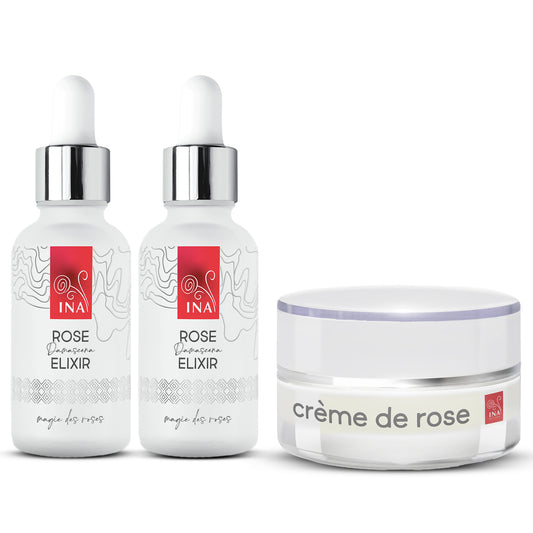
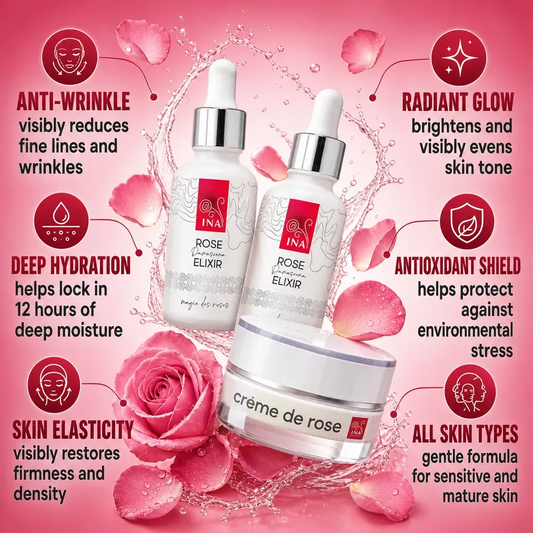
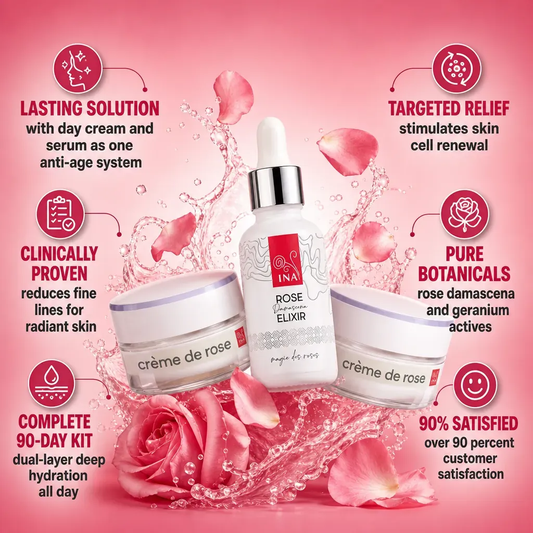
Yes, eye cream belongs in the morning routine too. After cleansing, dot a small amount around the eye bone, let it settle for a minute, then apply your moisturiser. In the daytime, finish with sun protection: the skin around the eyes is thin and shows the effects of sun early, so a day cream with SPF such as Crème de rose completes the morning.
In the evening
In the evening, apply eye cream once you have removed makeup and sunscreen thoroughly, as one of your last steps before bed. Pat it on gently with your ring finger and keep it away from the lash line. There is no need to rush: this is a good moment for a calm, unhurried application.
How often should you use eye cream?
For most people, once or twice a day is enough. If you are new to eye cream, start with the evening only for the first week, then add the morning once your skin is used to it. After that, morning and evening is the usual routine.
A small amount goes a long way: about a grain of rice for each eye area. Using more does not work faster, and it can leave the area feeling greasy. Do you need a separate day and night eye cream? Not necessarily. One gentle eye cream used twice a day is fine. Some people prefer a lighter texture by day and a richer one at night, but that is a matter of preference, not a rule.
If the skin stings or looks red after a new product, stop for a few days, then restart with a smaller amount. If puffiness is persistent, one-sided or comes with pain, swelling that spreads or changes in your vision, speak to a doctor rather than reaching for a cream. Our article on puffiness under the eyes explains when it is cosmetic and when it is not.
Your first eye cream in your late 20s
If you are 28 and wondering what to buy first, keep it simple. You do not need a long list of actives. Look for a light texture that absorbs quickly, hydrating ingredients, and a gentle plant-based active rather than a strong one. As with any new product, try it on a small area first.
Rose Eye Lift is a suitable first choice at this age. It combines damask rose and white truffle with bakuchiol, a plant-based alternative to retinol, plus caffeine and horse chestnut for the eye area. Start with the evening, then add the morning. To compare options, read the best eye cream: how to spot it.
Rose Eye Lift for every age

Created by the Bulgarian family business InaEssentials, Rose Eye Lift is suitable both for prevention from 20-25 and for daily anti-age care later on. The formula combines damask rose and the precious white truffle.

A gentle plant-based alternative to retinol, suitable for prevention and for mature skin.
Included to help the eye area look fresher, with less visible puffiness and dark circles.
One of the rarest and most valuable ingredients in skincare, a unique premium active rich in minerals, amino acids and antioxidants that supports the look of firmness and elasticity and smoother-looking skin.
“I’m loving this new rose eye cream … I can feel and see the difference”
“Absolutely highly recommended. The best eye cream I have ever used”
Special offer

Take care of the eye area with Rose Eye Lift and take advantage of the best-value bundle.
About the InaEssentials family

InaEssentials is a Bulgarian family business with over 25 years of experience in bio-farming and natural cosmetics using rose oil, herbal waters and actives from its own plantations. Every product is created with care for the skin and respect for nature.
Frequently asked questions
10% off your order
Use code blog10 at checkout for 10% off!
Sources and important information
- InaEssentials Premium Anti-Age Eye Cream with Rose - Rose Eye Lift: composition and use.
- InaEssentials about us: https://inaessentials.co.uk/pages/about-us
The information in this article is for educational purposes only and does not replace medical advice. InaEssentials products are cosmetic, not medicinal, and are intended for external skincare use. If you have any skin concerns, please consult a dermatologist.