

Updated: September 2026
In autumn the UV index drops and most people put the sunscreen away - but UVA, the wavelength behind pigmentation and loss of firmness, barely changes with the season and passes straight through cloud and window glass. That makes the September question not 30 versus 50, but whether anything goes on at all: an SPF 30 applied every morning protects far more than an SPF 50 left in the drawer.
A small difference in the number, a noticeable difference for sensitive skin in summer.
In short: the difference between SPF 30 and SPF 50 lies in the proportion of UVB rays the cream blocks. SPF 30 filters out around 96.7% of UVB rays, while SPF 50 blocks around 98%. The numerical difference sounds small, but for fair or pigmentation-prone skin, long hours in the sun, and for children, the higher factor provides a greater reserve of protection. What really matters is the amount you apply and how regularly you reapply.

- What SPF means and what it actually measures
- The difference between SPF 30 and SPF 50 in percentage terms
- SPF 30 or SPF 50: which factor should you choose
- UVA and UVB rays: why broad-spectrum protection matters more than the number
- How much sunscreen to apply and how often to reapply
- Natural SPF 50 sunscreen with Organic White Fir
What SPF means and what it actually measures
SPF stands for Sun Protection Factor. When people ask what SPF means, it refers to a number that shows how effectively a sunscreen blocks UVB rays — the ones responsible for redness and sunburn.
The number is often explained in terms of time: with factor 30, your skin could withstand thirty times longer in the sun before reddening than without protection. In theory that sounds precise, but in real-world conditions sweat, water, friction from clothing and applying too little product all change the calculation. It is therefore more useful to think of SPF as the proportion of rays blocked rather than as a clock.
The difference between SPF 30 and SPF 50 in percentage terms
Here are the specific numbers behind the labels. SPF 30 blocks approximately 96.7% of UVB rays, while SPF 50 blocks around 98%. That is exactly where the difference between SPF 30 and SPF 50 lies: just over one percentage point in favour of the higher factor.

That percentage looks negligible, but viewed from the other side the picture changes. With factor 30, roughly one in every thirty UVB rays reaches the skin; with factor 50, only one in fifty. For fair skin and long hours under a summer sun, that smaller residual matters.
SPF 30 or SPF 50: which factor should you choose
The choice between SPF 30 or SPF 50 depends on your skin type and situation, not on a universal rule. Factor 30 works well for short walks, overcast days and people with a deeper complexion. The higher protection becomes more relevant in a few specific circumstances.
- Fair skin, freckles or a tendency to burn quickly.
- Skin prone to pigmentation and darkening of spots after sun exposure.
- Long hours outdoors — at the beach, in the mountains or on the water.
- Children's skin and sensitive skin that needs a greater safety margin.
- Use of medication or skincare that increases photosensitivity.
If you are unsure, the higher factor is the safe choice for summer. A natural SPF 50 sunscreen covers the most demanding days without any compromise on daily skin care.

UVA and UVB rays: why broad-spectrum protection matters more than the number
The factor number alone only tells half the story. SPF relates to UVB rays, but your skin also encounters UVA rays, which penetrate more deeply and are associated with premature skin ageing and loss of firmness.

That is why the broad-spectrum label — meaning protection from both UVA and UVB rays — is at least as important as the SPF value. A well-formulated sunscreen combines both, helping to support the skin against sunburn and against photoageing at the same time. Before comparing 30 with 50, check whether your sunscreen protects against both types of rays.
How much sunscreen to apply and how often to reapply
The most common reason sunscreen underperforms is not a low factor but applying too little. Most people use around half the amount needed, which means even a high SPF melts away in practice. Here is how to get the real protection out of the tube.
- For the face and neck, use roughly two finger-lengths of product (follow the product instructions as the amount can vary).
- For the whole body, allow for around six teaspoons.
- Apply 15 to 20 minutes before going out in the sun.
- On the question of how often to reapply sunscreen: every two hours.
- Reapply immediately after swimming, heavy sweating or towel-drying.
Applied correctly, even factor 30 performs well. Left unrefreshed, even factor 50 cannot compensate. That is why the habit weighs as much as the number on the label.
Natural SPF 50 sunscreen with Organic White Fir
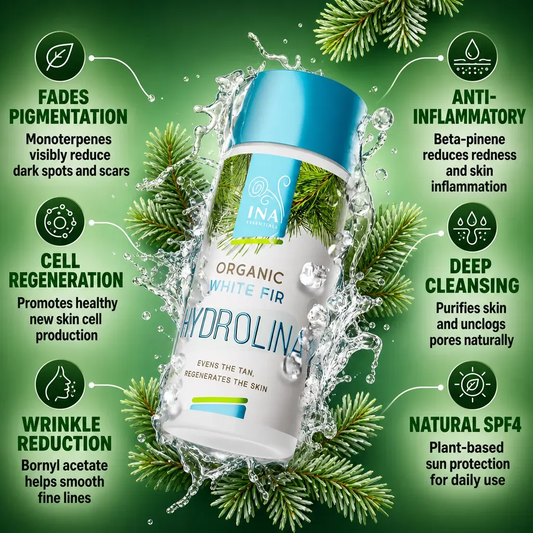
After all of the above, the natural question is which product combines a high factor with lightweight daily care. Our Natural Sunscreen for Face and Body SPF 50 with Organic White Fir was created for exactly that: broad UVA and UVB protection that absorbs quickly and leaves no white cast.

Its strength lies in the combination of a mineral filter and botanical ingredients grown on our family farm. Rather than a heavy layer, it delivers a light, comfortable feel suitable for everyday use on both face and body.
Soothes and helps hydrate the skin, and supports the visible reduction of the effects of sunburn, age spots and hyperpigmentation.
A mineral filter that creates a protective shield against UVA and UVB rays and helps protect the skin from environmental stressors, without visible white marks.
Nourish, soften and support the skin's natural defences while the formula stays light and absorbs easily.
On the skin the formula feels light and sinks in quickly, without the usual white layer. That makes it practical both under make-up and for a quick application just before heading out.

Behind that lightweight feel are carefully selected ingredients. The mineral filter and plant extracts work together without unnecessary chemical filters.

In short, here is what your skin receives with every application of this natural SPF 50 sunscreen.

Behind the numbers are real people. Thousands of families rely on this sunscreen throughout the summer months.


★★★★★
„It's always good to choose Bulgarian products, especially when they are of high quality. You are great!"

★★★★★
„The product is colorless, there's no white cream residue that makes it look like you've spilled a cup of yogurt."
Best value: Family Pack 2+1

One summer, covered for the whole family. With the Family Pack you get three bottles for the price of two and protect every skin type — adults and children alike — with the same high factor.
About the InaEssentials family

Behind every formula is a family story and a commitment to pure ingredients. InaEssentials grows its botanicals naturally and crafts them into skincare that supports the healthy appearance of skin and hair.
The SPF 50 sunscreen with Organic White Fir continues the same philosophy: nature that works gently, and care that thousands of families trust every summer.
Frequently asked questions