

Updated: September 2026
As the first cold days arrive and the heating goes on, indoor air dries out and heel skin loses water faster than it did in summer. If your heels are cracking right now the cause is rarely new: the summer dryness is simply becoming visible, so start care before painful fissures appear.
When we notice the first signs of roughness on our feet, we often put it down to temporary dryness or a lapse in our skincare routine. Yet rough skin and cracked heels are, in fact, a complex biological process. To find a lasting solution, we must first examine in depth what truly causes cracked heels and how a range of internal and external forces bring about this breakdown of skin tissue.
- The unique biology of the sole: why the heels in particular?
- Internal and medical causes of cracked heels
- Mechanical pressure and the biomechanics of walking
- External factors: the influence of footwear, habits, and environment
- The rebound effect: how incorrect removal makes things worse
- Breaking the cycle: the power of botanicals and urea (Fungomycol)
1. The unique biology of the sole: why the heels in particular?

The skin on the soles of our feet is designed to be up to 50 times thicker than skin elsewhere on the body, enabling it to absorb the daily impact and constant pressure of our body weight. This superpower comes, however, with a significant vulnerability: the soles lack sebaceous glands entirely. Unlike the face or the hands, heels cannot produce their own sebum to lubricate and keep the skin supple. They rely solely on sweat glands to combat dryness.
In the early stages, these cracks — known medically as fissures — appear as shallow white lines. If the process of dehydration and pressure continues unchecked, they deepen significantly, cutting through the living layers of skin, beginning to bleed, and developing into painful open wounds that are vulnerable to serious bacterial and fungal infections.
2. Internal and medical causes of cracked heels

Very often, cracking is not merely a cosmetic oversight but a symptom of a deeper internal condition. Studies identify several key medical diagnoses that act as an underlying cause of cracked heels:
- Diabetes mellitus (diabetic foot): In people with diabetes, a condition known as neuropathy develops — nerve damage that disrupts the function of the sweat glands in the feet. These glands cease to secrete, the skin is left without any moisture whatsoever, and cracking becomes severe. Because of impaired circulation, such wounds heal very slowly in diabetic patients.
- Hypothyroidism: An underactive thyroid slows the metabolism and cell renewal, leading to a marked reduction in the secretion of all the body's glands. The result is generalised dry, fragile skin — most pronounced in peripheral areas such as the heels.
- Psoriasis and atopic eczema: These skin conditions directly attack the skin barrier. Palmoplantar psoriasis (psoriasis of the palms and soles) causes an overproduction of hard plaques that rapidly split into deep, painful fissures.
- Fungal infections (mycosis): Certain types of fungal infection (for example the so-called "moccasin type") do not cause itching or blisters; instead, they mimic extreme dryness. They slowly destroy the keratin in the skin of the heels, causing it to scale and crack continuously.
- Vitamin deficiency: A chronic lack of fat-soluble vitamins A and E (responsible for elasticity and cell regeneration), together with deficiencies in zinc and omega-3 fatty acids, deprives the epidermis of its natural building blocks.
3. Mechanical pressure and the biomechanics of walking

Alongside biochemical processes, physical pressure and gravity also play a key role. Under the influence of body weight, the natural fat pad beneath the heel bone spreads laterally with every step. When the skin around the edge of the heel is soft and flexible, it simply stretches to accommodate this. When it is dry and hard, however, it no longer has the physical capacity to stretch and cracks under the tension.
This mechanical stress is compounded significantly by excess body weight (due to greater pressure on the sole), as well as by occupations that require prolonged standing (waiters, hairdressers, healthcare workers) on hard surfaces such as tiles, concrete, or tarmac. The specific biomechanics of an individual's gait — for example excessive inward or outward rolling of the ankle — can also overload a particular area of the heel and cause cracking localised to that spot.
A modern clinical study published In Vivo analysed the deformation, thickness, and stiffness of plantar skin during movement, using 3D kinematic markers and ultrasound imaging. The researchers demonstrated that at every step, during weight transfer (dorsiflexion), the skin of the sole is subjected to extreme mechanical stress: it stretches, thins, and increases its stiffness by up to 20% in real time to protect the foot from loading.
4. External factors: the influence of footwear, habits, and environment

Our lifestyle choices and the decisions we make every day can often act as a catalyst for the deterioration of the skin on our feet:
- Open footwear, sandals, and flip-flops: In summer, this type of footwear is popular, yet it lacks a back strap to keep the heel's fat pad stable. The skin spreads freely, while constant exposure to hot air, street dust, and dry wind literally draws the last traces of moisture out of the soles.
- Walking barefoot: Direct contact with absorbent surfaces such as rugs, carpets, or sun-warmed sand acts as a dehydrating agent, stripping the natural lipids from the surface of the epidermis.
- Hot showers and aggressive hygiene: Prolonged soaking in very hot water and frequent use of strongly alkaline soaps damages the delicate hydrolipidic barrier of the skin and accelerates its hardening.
5. The rebound effect: how incorrect removal makes things worse

One of the most paradoxical contributors to chronically cracked heels is incorrect home treatment. Confronted with accumulated hard skin, many people reach for aggressive metal graters — essentially kitchen-style rasps — or coarse pumice stones. Used incorrectly, these tools mechanically tear the skin fibres and cause trauma to the tissue.
Human skin has a powerful cellular memory. When subjected to this kind of assault and abrasion, the brain receives a danger signal indicating a risk of injury. As a protective response, the body immediately begins to produce an even thicker, harder, and denser layer of dead skin to shield itself. This creates a closed vicious cycle: the more aggressively you scrape your heels, the faster and thicker the dry layer returns.
6. Breaking the cycle: the power of botanicals and urea (Fungomycol)

Having understood the causes, it becomes clear that tackling cracked heels requires an intelligent solution — one that does not traumatise the skin, but gently encourages it to renew and soften. This calls for a product that combines effective keratolytic ingredients with pure, nourishing botanical care.
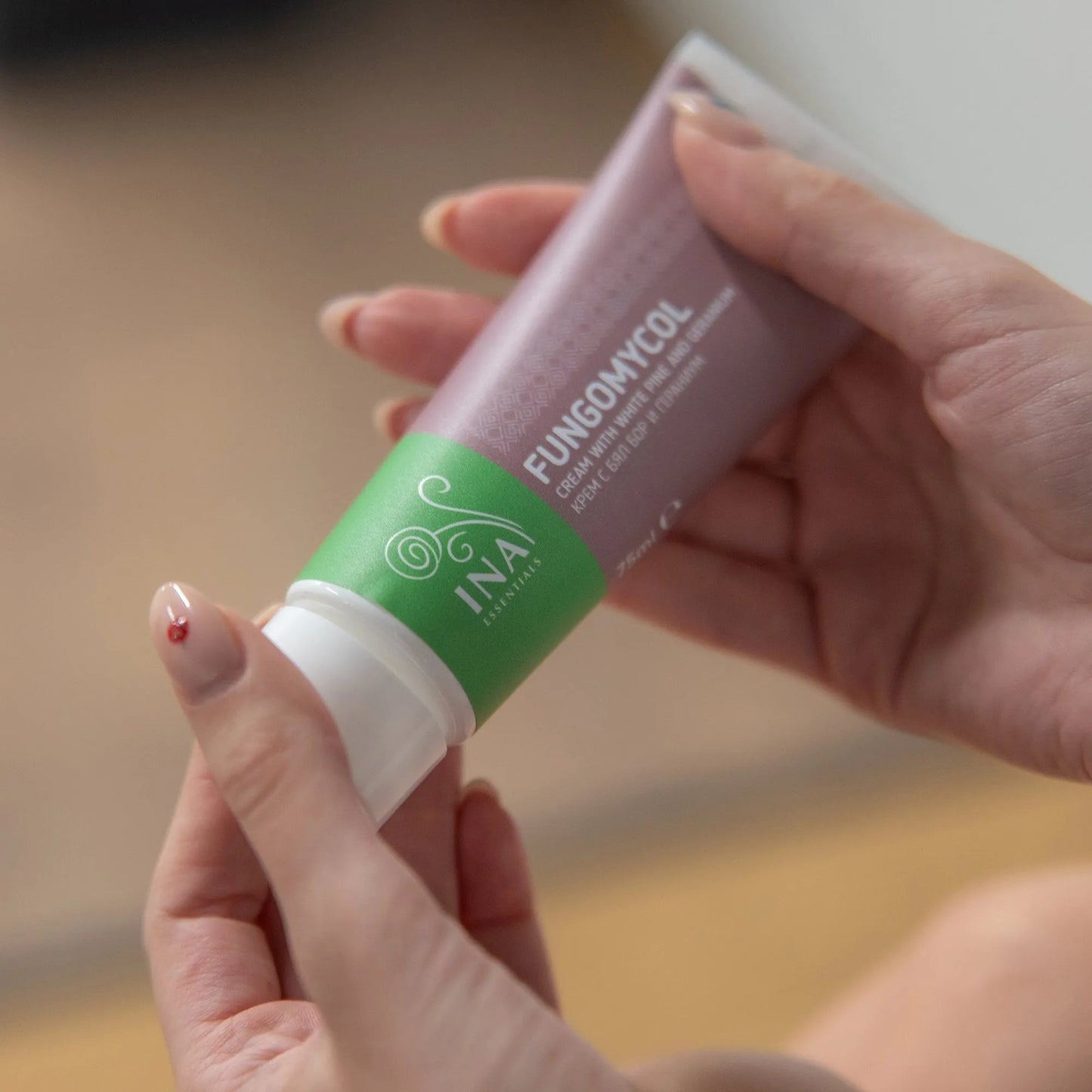
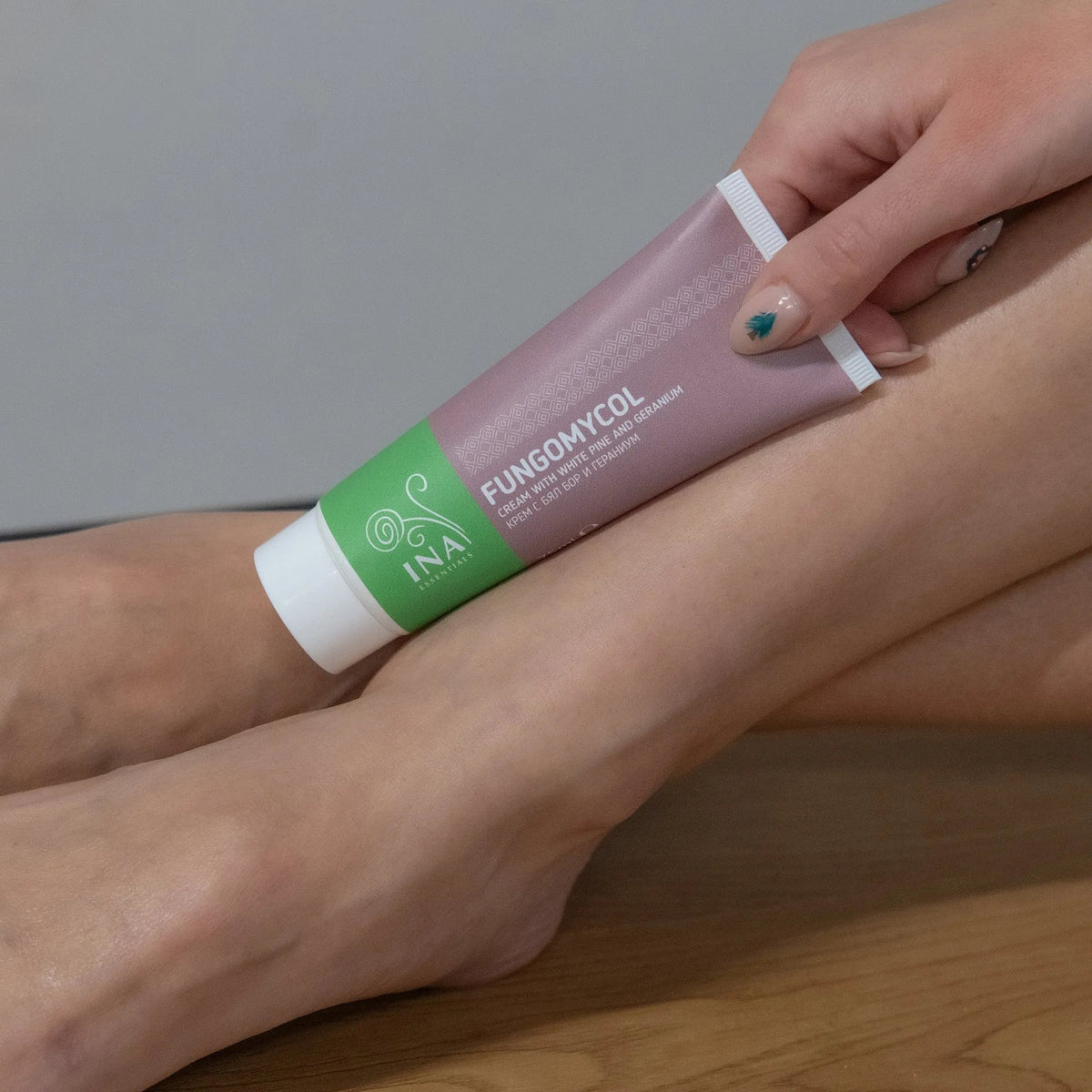
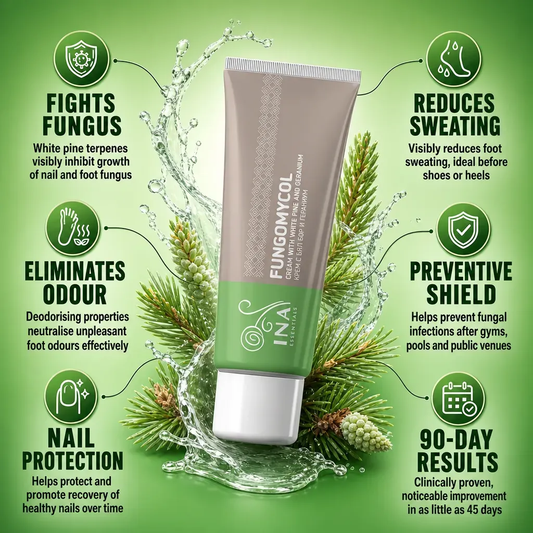
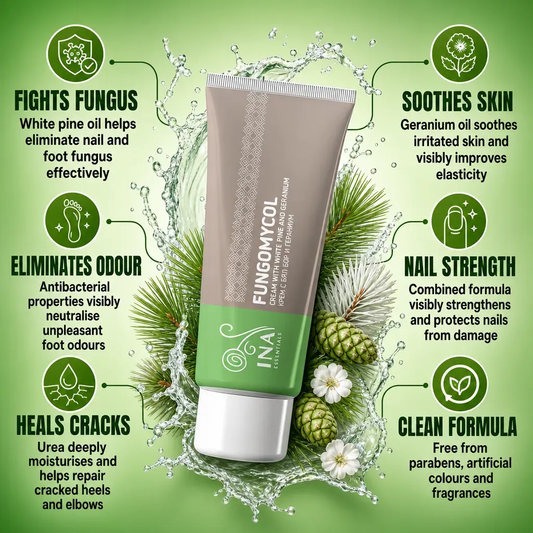
Exactly this kind of effective cream for severely cracked heels is Fungomycol by InaEssentials. Its formula has been developed specifically to address all of the causes of dryness and cracking outlined above:
Urea draws moisture into the deeper layers of the dermis and, gently — without any mechanical abrasion — breaks down hardened dead cells. The skin exfoliates naturally, revealing a smooth, soft surface beneath. Horse chestnut improves elasticity and supports healthy circulation.
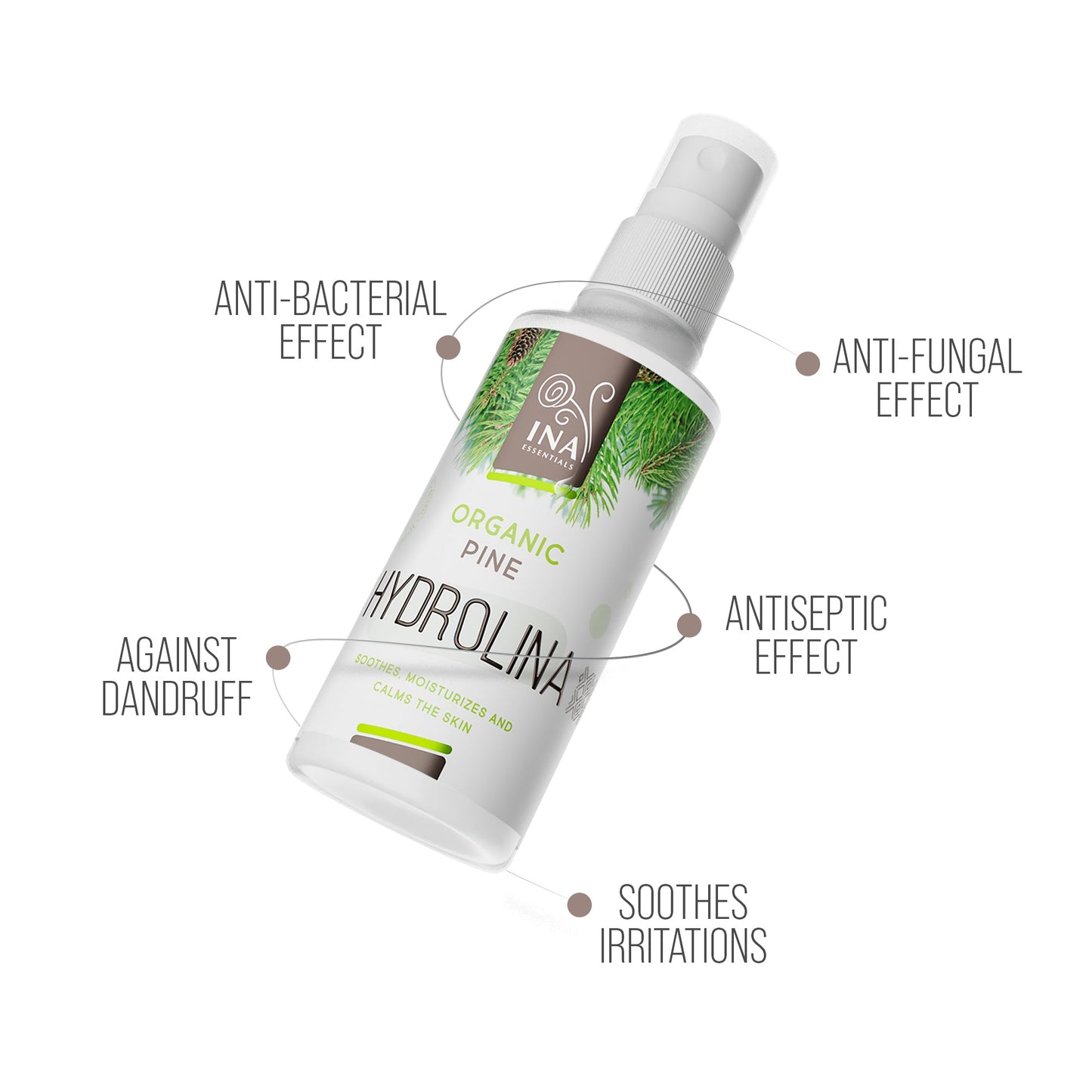
Because fissures leave the skin in a delicate, exposed state, white pine oil and smoke tree extract provide an intense purifying care, soothe irritation, and maintain a lasting sensation of freshness and comfort.
Together they durably restore the affected elasticity of the tissues, deeply nourish the skin, and help it withstand the mechanical pressure of walking without cracking again.
Rediscover the softness of your feet:

Instead of hiding your feet and enduring discomfort at every step, trust in the closed production cycle of the family brand InaEssentials — pure cosmetics, grown with care and extracted directly from Bulgarian nature.


About the InaEssentials family

InaEssentials is more than a cosmetics brand — it is a shared family mission, born of a love for Bulgarian nature and a belief in pure, unadulterated care. We believe that the best solutions for our health and beauty come directly from the earth. That is why we close the entire production cycle ourselves — from our own organically farmed fields, cultivated with dedication and without compromise, to the finished product that reaches you.
Every drop and every formula, including Fungomycol cream, carries the spirit of our traditions and our commitment to genuinely natural cosmetics that deliver real results and restore a sense of everyday comfort.
Scientific sources:
- • Celleno L. Topical urea in skincare: A review. Dermatol Ther. 2018 Nov;31(6):e12690. doi: 10.1111/dth.12690. Epub 2018 Oct 30. PMID: 30378232.
- • International Working Group on the Diabetic Foot (IWGDF), 2023. Guidelines on the prevention and management of diabetic foot disease.
- • Smith SGVS, Yokich MK, Beaudette SM, Brown SHM, Bent LR. Effects of foot position on skin structural deformation. J Mech Behav Biomed Mater. 2019 Jul;95:240-248. doi: 10.1016/j.jmbbm.2019.04.012. Epub 2019 Apr 17. PMID: 31054375.
- _____________________________________________________
- *This article has been created to provide useful, scientifically grounded information on the anatomical and medical causes of dry skin on the feet. The content is purely informational and does not replace professional medical advice, diagnosis, or treatment from a dermatologist or podiatrist — particularly for patients with diabetes mellitus.